

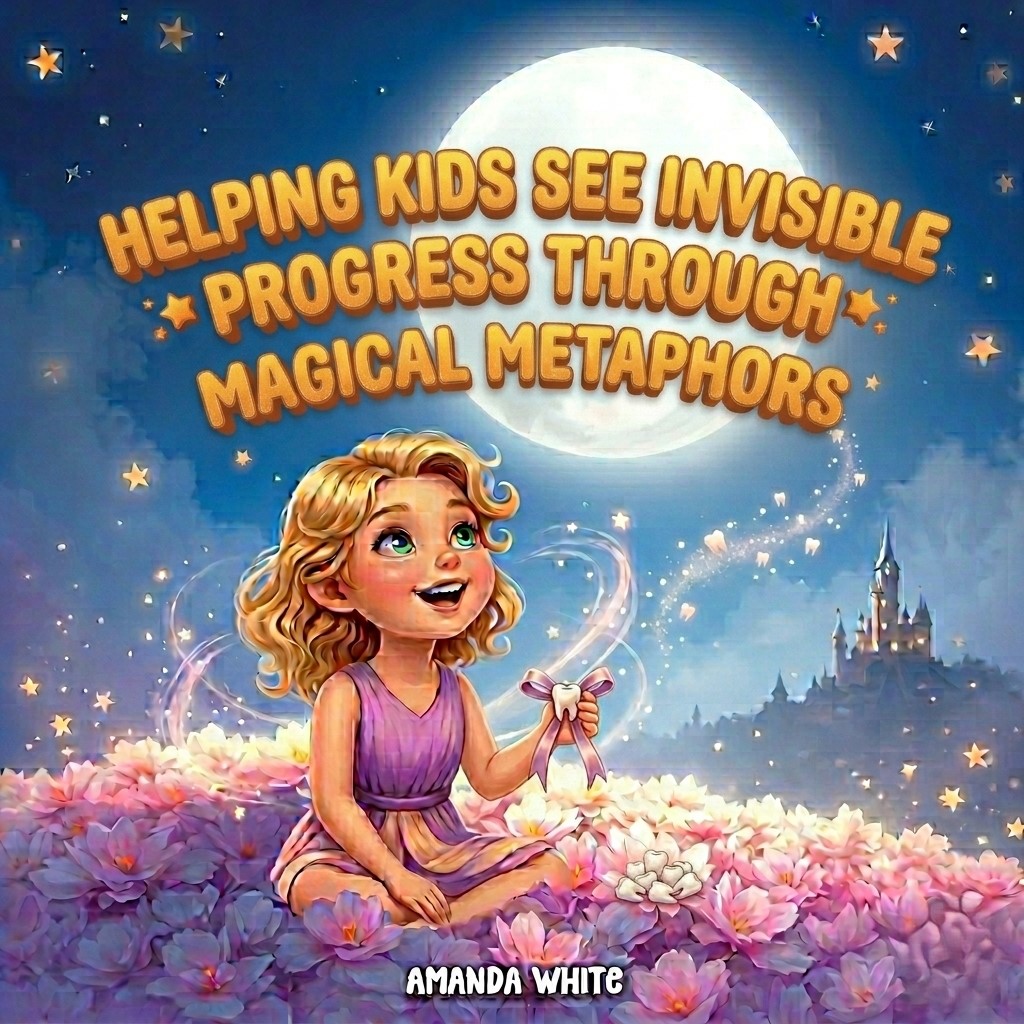
Children are naturally curious and imaginative, but one challenge parents and educators often encounter is helping kids recognize growth that isn’t immediately visible. Skills like patience, self-control, emotional understanding, and persistence develop gradually, making progress feel slow or even imperceptible. This is where magical metaphors in storytelling can play a transformative role. By connecting everyday effort to imaginative, magical experiences, children can visualize the invisible and stay motivated on their journey of growth.
Using metaphor and fantasy, children learn that real progress often happens quietly, beneath the surface. A young fairy’s wings slowly gaining sparkle, a tiny sapling growing toward the sun, or a magical creature learning to fly are all examples of stories that make gradual growth tangible and meaningful. These narratives help children understand that persistence, reflection, and practice pay off, even when the results aren’t immediately obvious.
Why Invisible Progress Is Hard for Kids to See
Young children live in a world dominated by immediate feedback. They see a puzzle completed, a block tower built, or a painting finished, and naturally associate effort with visible results. But much of the most important learning, emotional regulation, problem-solving, and patience is internal and invisible.
For example, a child learning to wait calmly for their turn may not see a dramatic change from one day to the next. Without a way to visualize these subtle shifts, they may feel frustrated or discouraged. This is where magical metaphors in stories become powerful tools: they provide imaginative imagery that mirrors invisible growth, helping children connect effort with eventual outcomes and reinforcing persistence as a value.
Magical Metaphors Make Growth Visible
Stories with magical elements allow abstract concepts to become tangible. Consider a young fairy practicing her wings in a storybook: each day she stretches, flutters, and learns, yet the wings’ shimmer only appears gradually. Children reading the tale can identify with her patience and understand that small daily efforts accumulate into meaningful transformation.
Similarly, a sapling in a magical forest may grow slowly, unseen at first, until one day it sprouts vibrant leaves. These metaphors teach children that invisible progress is still real and meaningful. Parents and educators can highlight these metaphors, pointing out, for instance, “See how the fairy’s wings are starting to sparkle? That’s from all her practice!” Such reflections reinforce that growth often requires faith, patience, and consistent effort.
Encouraging Reflection and Self-Awareness
Magical metaphors also encourage children to reflect on their own invisible progress. After reading, parents can ask questions like, “What is something you’ve practiced quietly that you’re proud of?” or “Can you think of a time you were patient, even if it didn’t feel like it helped right away?” These discussions help children identify and celebrate their subtle accomplishments, building self-awareness and emotional resilience.
Storytelling combined with reflective dialogue makes the invisible tangible. Children learn to value effort itself, not just visible results. They understand that every practice session, act of patience, or thoughtful decision contributes to growth, even if it is not immediately apparent.
Practical Ways to Reinforce the Concept
Parents and educators can use a variety of techniques to help children connect magical metaphors with real-life invisible progress:
- Daily Rituals: Establish small, consistent practices like journaling, mindful breathing, or short acts of kindness and relate them to the story’s magical growth.
- Progress Visualization: Use metaphors such as a “sparkle chart” or a “magic garden” to illustrate progress that isn’t immediately visible. Each day’s effort adds a sparkle or leaf, showing cumulative growth.
- Story-Based Role Play: Children can act out the fairy’s journey, reinforcing persistence and celebrating small milestones.
- Discussion Prompts: After reading, ask children to reflect on how their own “wings,” “magic seeds,” or “sparkles” are developing, connecting story metaphors to personal growth.
These strategies make abstract lessons concrete and provide children with daily reminders that effort matters, even when progress feels hidden.
Emotional and Cognitive Benefits
Recognizing invisible progress is more than motivational; it nurtures emotional intelligence and cognitive development. Children who understand that effort produces gradual results are less likely to become frustrated or give up prematurely. They develop patience, resilience, and self-regulation, which are essential for learning and social interactions.
Magical metaphors also enhance creativity and imagination. By linking internal growth to enchanted worlds and fantastical creatures, children strengthen their ability to think abstractly while internalizing positive values. They learn that both imagination and persistence are tools for navigating challenges and achieving meaningful outcomes.
The Lasting Power of Magical Metaphors
Stories that use magical metaphors provide children with a framework for understanding life’s subtler lessons. A fairy’s shimmering wings, a growing sapling, or a dragon learning to breathe fire slowly all symbolize growth that isn’t always visible but is powerful and real. By connecting these images to their own experiences, children develop a sense of accomplishment, confidence, and patience.
Parents and educators who intentionally highlight these metaphors help children see that success is not just about immediate results, but it is about the process of becoming. They teach children to value effort, persistence, and internal development, fostering resilience and a growth mindset that lasts well beyond childhood.
Conclusion: Making the Invisible Visible
Invisible progress can feel frustrating for children, but magical metaphors provide a bridge between imagination and real-world development. Stories about fairies, saplings, or other enchanted characters allow children to visualize effort, patience, and growth, making abstract lessons concrete and engaging.
By combining storytelling, reflective discussion, and imaginative practice, parents and educators help children recognize the value of their small, everyday efforts. Through magical metaphors, children learn that every step forward, no matter how quiet or unseen, is meaningful. They begin to see that growth is not always instant, but it is always happening, and the journey itself is as magical as the results.