

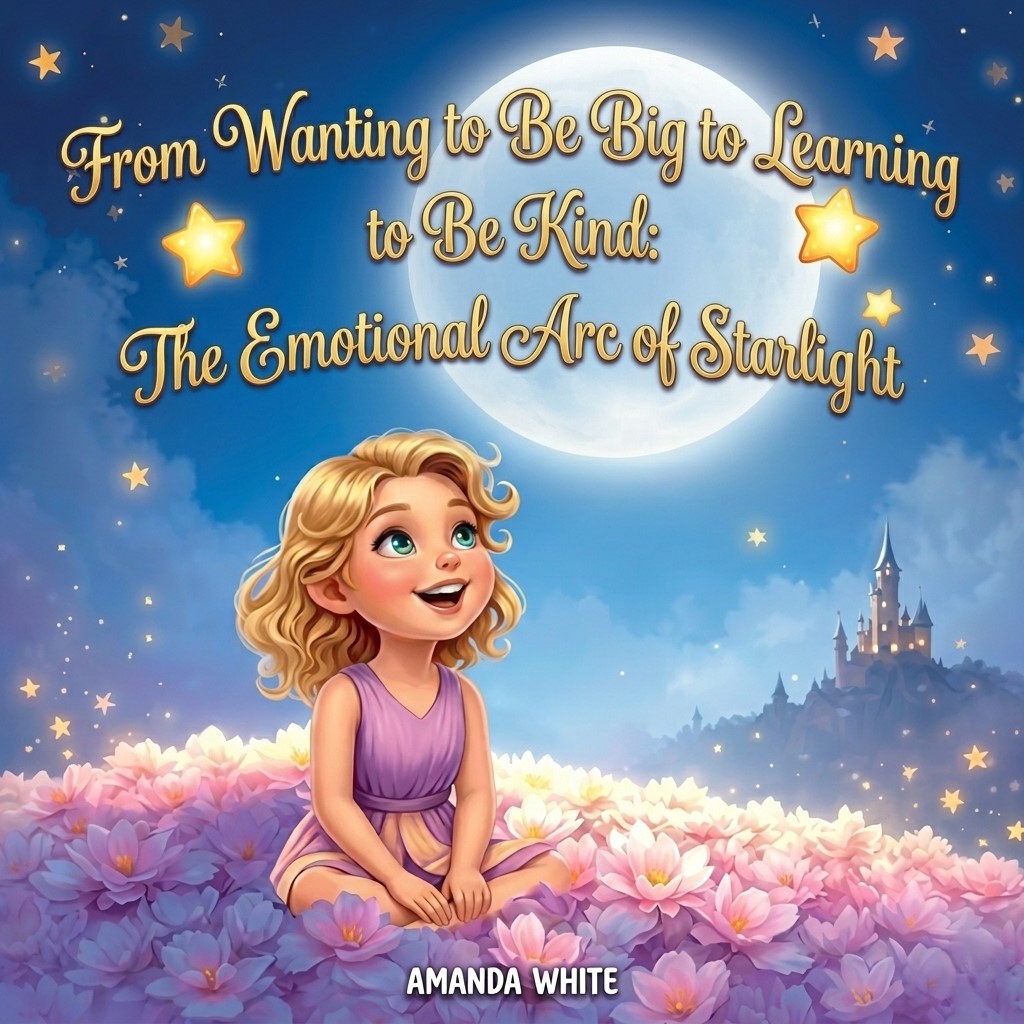
Introduction: The Universal Desire to Grow Up
Almost every child, at some point, whispers the same longing: “I want to be big.” Bigger means stronger. Bigger means noticed. Bigger means capable of doing what older siblings or grown-ups can do. The desire to grow up is universal and deeply human.
In Starlight, this longing becomes the emotional starting point of the story. Starlight, a small and eager fairy, dreams of having her wings fully grown. To her, wings represent arrival. They symbolize importance and readiness. Without them, she feels incomplete.
Children immediately recognize this feeling. They, too, measure themselves against milestones, height charts, school grades, and new privileges. Growing up often seems like a race toward significance.
But Starlight gently reframes the journey. The story suggests that becoming “big” is not about size or speed. It is about character.
Comparison and Childhood Impatience
Comparison is one of childhood’s earliest emotional challenges. A child sees what others can do, such as ride a bike, read a book, stay up later, and begins to measure themselves against those benchmarks.
Starlight struggles with this same impatience. She sees other fairies with strong, shimmering wings and wonders why hers have not yet appeared. Her longing intensifies each time she notices the difference.
This mirrors the real emotional experience of children. Comparison can spark motivation, but it can also create insecurity. When growth feels delayed, frustration sets in. Waiting feels unfair.
Impatience is not a flaw, but it is a developmental stage. Children are still learning to regulate desire and manage expectations. They often equate speed with success.
By portraying Starlight’s restlessness with compassion, the story validates these feelings. It does not shame her for wanting more. Instead, it acknowledges that longing is part of growth.
But it also introduces a deeper lesson: comparison distracts from personal progress. Starlight’s wings will not grow faster because she envies others. They will grow when she is ready.
This shift from external comparison to internal development is central to her emotional arc.
A Mother’s Gentle Guidance
Every meaningful transformation in childhood is supported by guidance. In Starlight, this comes through her mother’s calm and reassuring presence.
Rather than dismissing Starlight’s frustration, her mother listens. She validates the desire to grow while gently redirecting the focus. Wings, she explains, do not appear because of age alone. They grow when the heart is prepared.
This guidance is powerful because it models emotional intelligence. The mother does not rush to fix the problem or promise immediate change. She offers perspective. She plants a seed of understanding.
For children reading the story, this interaction demonstrates the value of patient mentorship. It shows that growth often requires trusted adults who can see further than we can.
The mother’s tone matters. It is not authoritative or critical; it is steady. Her reassurance communicates safety. She frames waiting not as punishment, but as preparation.
In doing so, the story emphasizes an essential truth: wise guidance helps children transform impatience into purpose.
Transformation Through Daily Practice
Starlight’s journey does not change overnight. Instead of waking up instantly transformed, she begins practicing small virtues each day.
She chooses kindness when it would be easier to sulk. She offers help when she feels overlooked. She expresses gratitude even when she wishes for more.
These daily acts become the true catalyst for growth.
This portion of the story is particularly important because it shifts the focus from passive wishing to active becoming. Starlight learns that she cannot force her wings to grow—but she can cultivate the qualities that prepare her for them.
For children, this reinforces the idea that transformation is gradual. Character is built through repetition. Small decisions accumulate into significant change.
The symbolism is clear: wings do not sprout from impatience; they emerge from steady effort.
This mirrors real emotional development. Patience, empathy, and resilience are not learned in a single moment. They are practiced repeatedly, often in ordinary circumstances.
By emphasizing daily discipline, the story teaches that growth is less about dramatic breakthroughs and more about consistent virtue.
The Shift from Self-Focus to Service
Perhaps the most profound shift in Starlight’s arc occurs when her attention moves outward.
At the beginning of the story, her focus is inward: When will I grow? Why not me? What am I missing? Her identity feels tied to what she lacks.
But as she begins practicing kindness and gratitude, something changes. She starts noticing others’ needs. She becomes more attentive to how she can help, comfort, or encourage.
In this shift from self-focus to service, Starlight matures emotionally.
Ironically, it is during this period of outward attention that her wings finally appear. The story suggests that true readiness comes when self-centered longing gives way to compassionate action.
For children, this lesson is transformative. It reframes success. Growth is no longer about proving oneself, but it is about contributing to others.
Service becomes the bridge between longing and fulfillment.
By showing that wings grow when Starlight stops obsessing over them, the narrative teaches an enduring principle: purpose is discovered when we look beyond ourselves.
What This Teaches Children About Purpose
At its heart, Starlight is not simply a story about fairy wings. But it is a story about identity and meaning.
Children naturally seek purpose. They want to know they matter. They want to feel capable and significant. The danger lies in equating significance with status or speed.
Starlight’s emotional arc gently challenges that assumption. Her journey shows that:
- Growth is internal before it is visible.
- Comparison delays contentment.
- Guidance accelerates understanding.
- Daily virtue shapes character.
- Service unlocks fulfillment.
By the end of the story, Starlight’s wings are not merely decorative. They are symbolic of her readiness to rise, not above others, but alongside them.
For children, this narrative plants a powerful belief: you do not become important by becoming bigger. You become important by becoming kinder.
In a world that often pressures children to advance quickly and compete constantly, this message offers relief. It assures them that their worth is not measured by how fast they grow, but by who they choose to become.
And perhaps that is the true emotional arc, not just of Starlight, but of every child.
From wanting to be big…
to learning to be kind…
to discovering that kindness is what makes you ready to soar.